
English at Renishaw Primary School
Subject Champion: Mrs Dixon
Our English curriculum is based around the National Curriculum. We aim to instil in the children the importance of reading and writing and inspire a habit and passion for reading widely and often and confidence in applying writing skills for purpose. We believe that teaching the children to read proficiently and fluently and write creatively and consistently are key to a positive attitude to English and important duties as a school. We aim to grow a love of reading for pleasure in our children (both in and out of school) as we recognise the importance of reading and writing to their independent learning, further success and well-being. We believe that children need to develop a secure knowledgebase in English, which follows a clear pathway of progression as they advance from nursery to year 6. That a secure basis in English skills is crucial to a high-quality education and will give our children the tools they need to thrive in Key Stage 3 and beyond.
 |
 |
 |
Reading
At Renishaw Primary School, Reading and the teaching of Reading is the foundation of our curriculum. Our bespoke Reading curriculum has the same high ambitions as the National Curriculum and focuses on word reading, comprehension (both listening and reading) and developing a love of reading.
Our reading curriculum is accessible for all regardless of gender, race or religion or special education needs. We have a range of tools and techniques used to support and enhance the teaching of reading, including the use of IT, drama (speaking and listening skills) and debate. From year 2 upwards, whilst our approach is around using one core whole class text each half term, we do aim to create variety in our reading opportunities to develop skills as thoroughly as possible. Some pupils may not be able to access the whole class text and will require differentiated texts to ensure full engagement. However, our Talk for Writing approach supports all learners across the English Curriculum. Our consistent whole school approach to the teaching of reading ensures that we close any gaps and enable the highest possible number of children to attain well.
Early Reading and Phonics
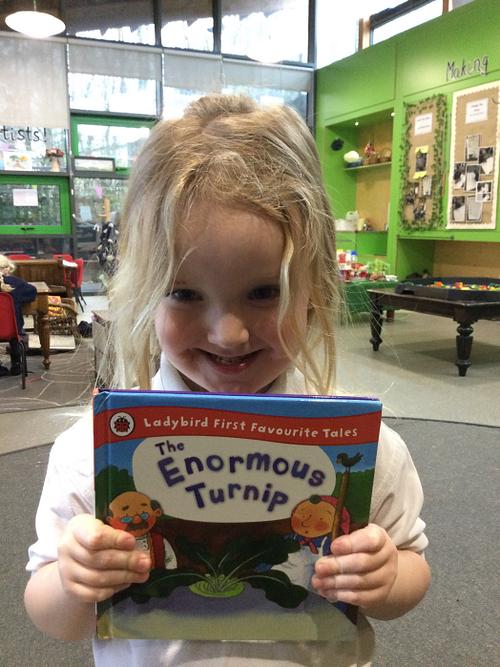
In the early stages of reading, we teach, support, and encourage our children to explore books – to hold them, to connect with them and to investigate their contents. Our reading curriculum is closely linked to our Talk for Writing curriculum: we explore books and learn to tell stories and recite rhymes through actions. We believe that initially introducing our children to a wide variety of stories and rhymes is essential in strengthening the foundations for a growing enjoyment of reading.
Little Wandle
Our staff, children, parents and carers are trained to use the same terminology, resources and language when talking about phonics. We follow the Little Wandle approach to synthetic phonics. The children read books that follow exactly the same progression as the school’s scheme which are fully decodable. Parents and carers of EYFS and Key Stage One children are invited to a phonics workshops bi-annually, during Autumn and Spring term to learn how phonics is taught and how best to support their children.
We begin teaching an understanding of sound and sound identification in Nursery and as children show readiness. Nursery children enjoy a fun and multi-sensory synthetic phonics method that gets them excited about reading and writing from an early age. They continue on their phonics journey throughout Reception, Year One and into Year Two, with the aim of leaving KS1 as fluent readers. They will also have a growing understanding of text meaning which will be further developed during Key Stage 2. From Year 2 upwards, we teach whole class reading daily. Within these sessions, there is a clear focus on the skills and strategies our children need to become competent readers.
Development in phonics is reviewed half termly which means that children who are ready to move on make excellent progress. Year One children complete a phonics screening check in June. This is another way for teachers to ensure that children are making sufficient progress with their phonics skills, and that they are on track to become fluent readers who can enjoy reading for pleasure and for learning.
Little Wandle also offers a rapid catch-up programme for those children who are still developing their phonic knowledge in key stage two. This programme is delivered daily, as with phonics in key stage one, to ensure all children can learn phonic decoding at their pace.
To find out more about Little Wandle in our school, head over to our page dedicated to Little Wandle phonics and Early Reading:
Phonics and Early Reading (Learning - Curriculum menu tab)
Reading National Curriculum Programme of Study
The programmes of study for reading at key stages 1 and 2 consist of 2 dimensions:
- Word Reading
- Comprehension (both listening and reading)
It is essential that teaching focuses on developing pupils’ competence in both dimensions; different kinds of teaching are needed for each.
Skilled word reading involves both the speedy working out of the pronunciation of unfamiliar printed words (decoding) and the speedy recognition of familiar printed words. Underpinning both is the understanding that the letters on the page represent the sounds in spoken words. This is why phonics should be emphasised in the early teaching of reading from EYFS.
Good comprehension draws from linguistic knowledge (of vocabulary and grammar) and on knowledge of the world. Comprehension skills develop through pupils’ experience of high-quality discussion with the teacher, as well as from reading and discussing a range of stories, poems and non-fiction. All pupils must be encouraged to read widely across both fiction and non-fiction to develop their knowledge of themselves and the world they live in, to establish an appreciation and love of reading, and to gain knowledge across the curriculum. Reading widely and often increases pupils’ vocabulary because they encounter words they would rarely hear or use in everyday speech. Reading also feeds pupils’ imagination and opens up a treasure house of wonder and joy for curious young minds.
It is essential that, by the end of their primary education, all pupils can read fluently, and with confidence, in any subject, prepared for the next step in their education.
Teaching Reading Comprehension
Underpinned by the ‘Simple View of Reading Model’, daily reading sessions, to explicitly teach the skills of comprehension, are delivered through high quality teaching and with support of a range of resources and text types.
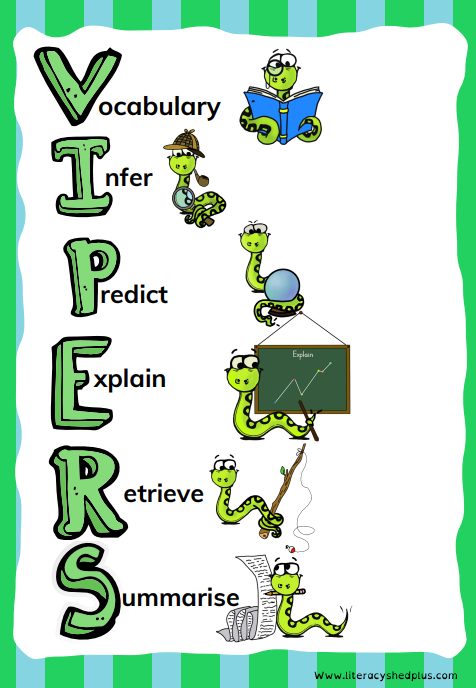
We use the VIPERS Question Stems from Literacy Shed, linked to Spelling Shed, alongside a variety of text extracts collected from resources such as cracking comprehension.
VIPERS
Vocabulary - Draw upon knowledge of vocabulary in order to understand the text.
Infer - Make inferences from the text.
Predict - Predict what you think will happen based on the information that you have been given.
Explain - Explain your preferences, thoughts and opinions about the text.
Retrieve - Identify and explain the key features of fiction and nonfiction texts such as: characters, events, titles and information.
Sequence - Sequence the key events in the story (KS1) and/or
Summarise - Summarise the main ideas from more than one paragraph (KS2)
/docs/Skills-Progression-English-Reading_244137194.pdf
Our Class Libraries
We encourage a love of reading whenever we can; children have time daily to not only read books linked to Little Wandle or our banded scheme, but read books purely for pleasure. All classes have a book corner, which the children are involved in managing and stocking. Are class libraries are inviting and often support children with their Zones of Regulation.
We aim to have inviting Class Reading Displays and have worked hard to ensure that all classes promote a love of reading. This ‘Book Culture’ is high on the list of our School Improvement Plan.
In the EYFS, the children have a range of accessible picture books in their reading areas. These areas are as enticing as possible.
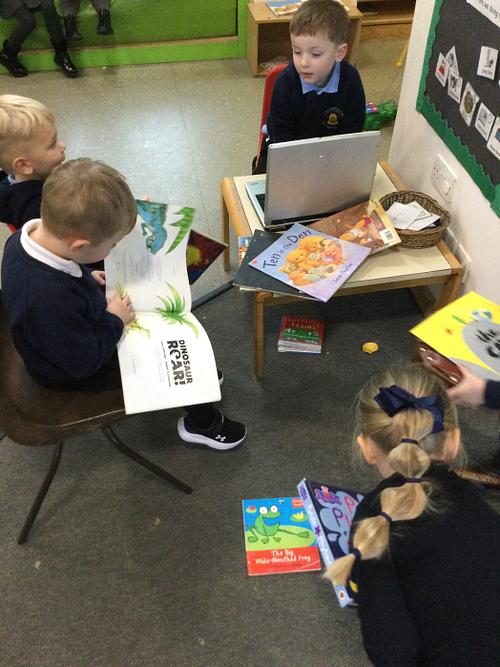
Here we have some of our Nursery children reading independently to each other!
Our Reading Ambassadors
Our Reading Ambassadors are pupil volunteers with a passion for reading. They work with the school leadership team and school staff to ensure that Renishaw Primary School provides its pupils with enriched opportunities to become independent learners and develop their literacy skills to benefit their education and beyond. They aim to promote reading and literacy across the school and plan opportunities and events to enrich the curriculum and promote reading!
2026 - The National Year of Reading!
This year, as it is the National Year of Reading, we will be having an extra-special focus on all things reading. Keep up to date with events which will be shown on this page and through parent mail and Class Dojo!
https://literacytrust.org.uk/about-us/national-year-of-reading-2026/
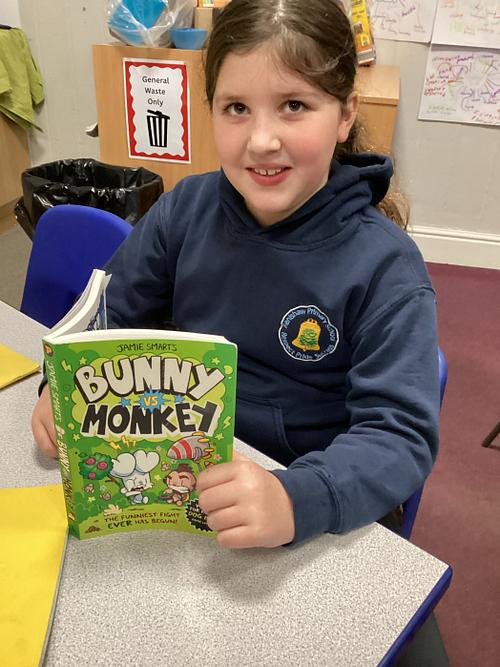
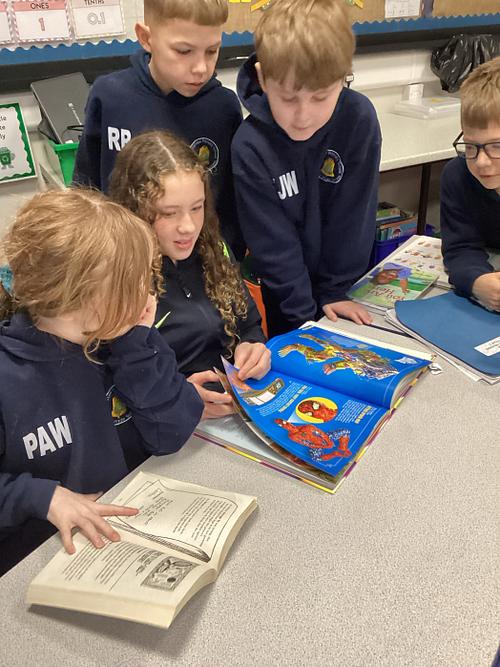
Reading for Pleasure Fridays!
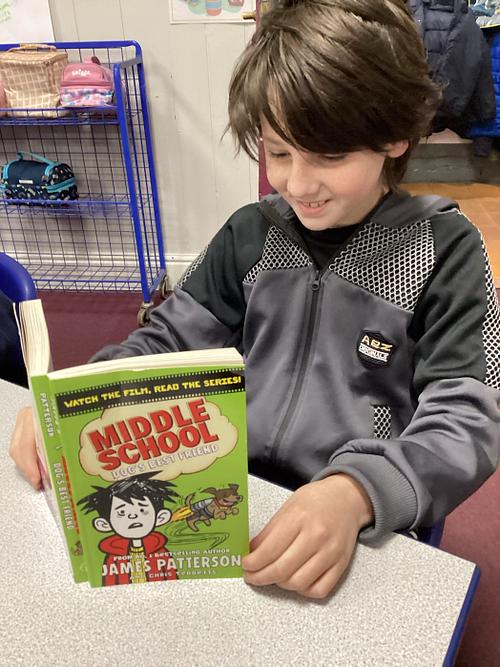
Children bring ANYTHING they love to read. There are opportunities to share their reading preferences with their peers, participate in book talk and of course, read... the children also have the opportunity to D.E.A.R (drop everything an read)!
 |
 |
 |
 |
Home reading
Reading every night at home with your child is beneficial in supporting the progress in phonics and reading. Each child from Reception to year 2 will be sent home a decodable book linked to their phonics learning.
You can:
- Read with your child each day, asking questions about what they are reading,
- Practise reading and writing tricky words,
- Practise your children’s handwriting.
These activities will develop your child’s ability to decode what they are reading, increasing fluency and an interest in reading.
Writing
We recognise the importance of nurturing a culture where children take pride in their writing, can write clearly and accurately and adapt their language and style for a range of contexts. We want children to have an understanding that writing has a real purpose and that word choice and style can bring about change.
Reading and writing work together. A wide ‘diet’ of reading is provided for our children, including whole class, guided reading, shared reading and, in addition, phonics lessons daily for Nursery to Year 2 and a specific scheme for Key Stage 2 children who need further support with this. We consider storytelling and the sharing of stories to be the keystone to develop the enjoyment of reading as well as modelling fluent reading and comprehension skills. We therefore plan in a shared reading experience daily, through our writing approach, ‘Talk for Writing’, delivered from Nursery to Year 6.
Talk for Writing
At Renishaw Primary School, we use the ‘Talk for Writing’ Approach developed by writer, Pie Corbett.
Follow this link to take you to a short clip of Pie Corbett explaining Talk for Writing!https://youtu.be/VI2OWdZo6nY
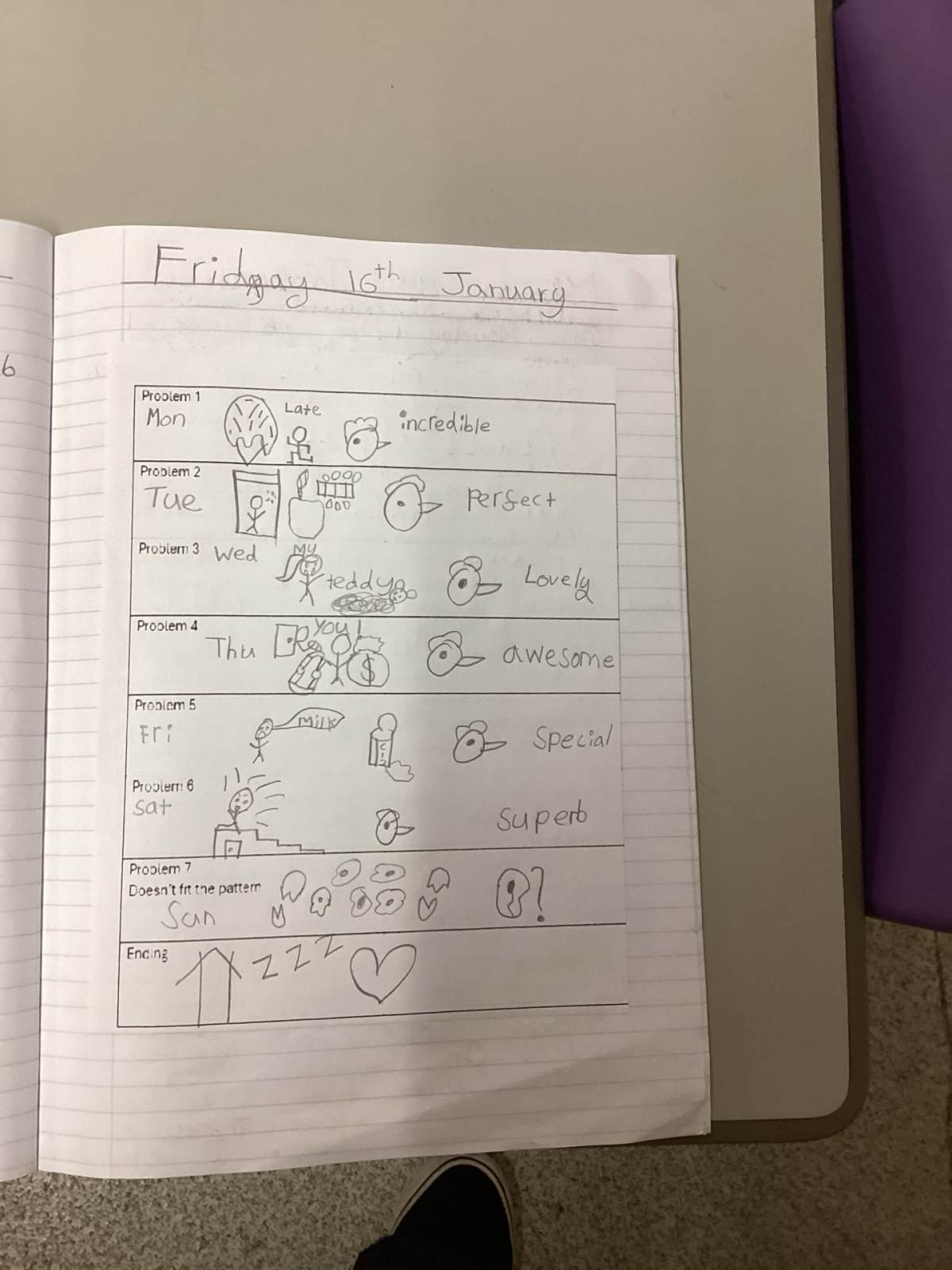
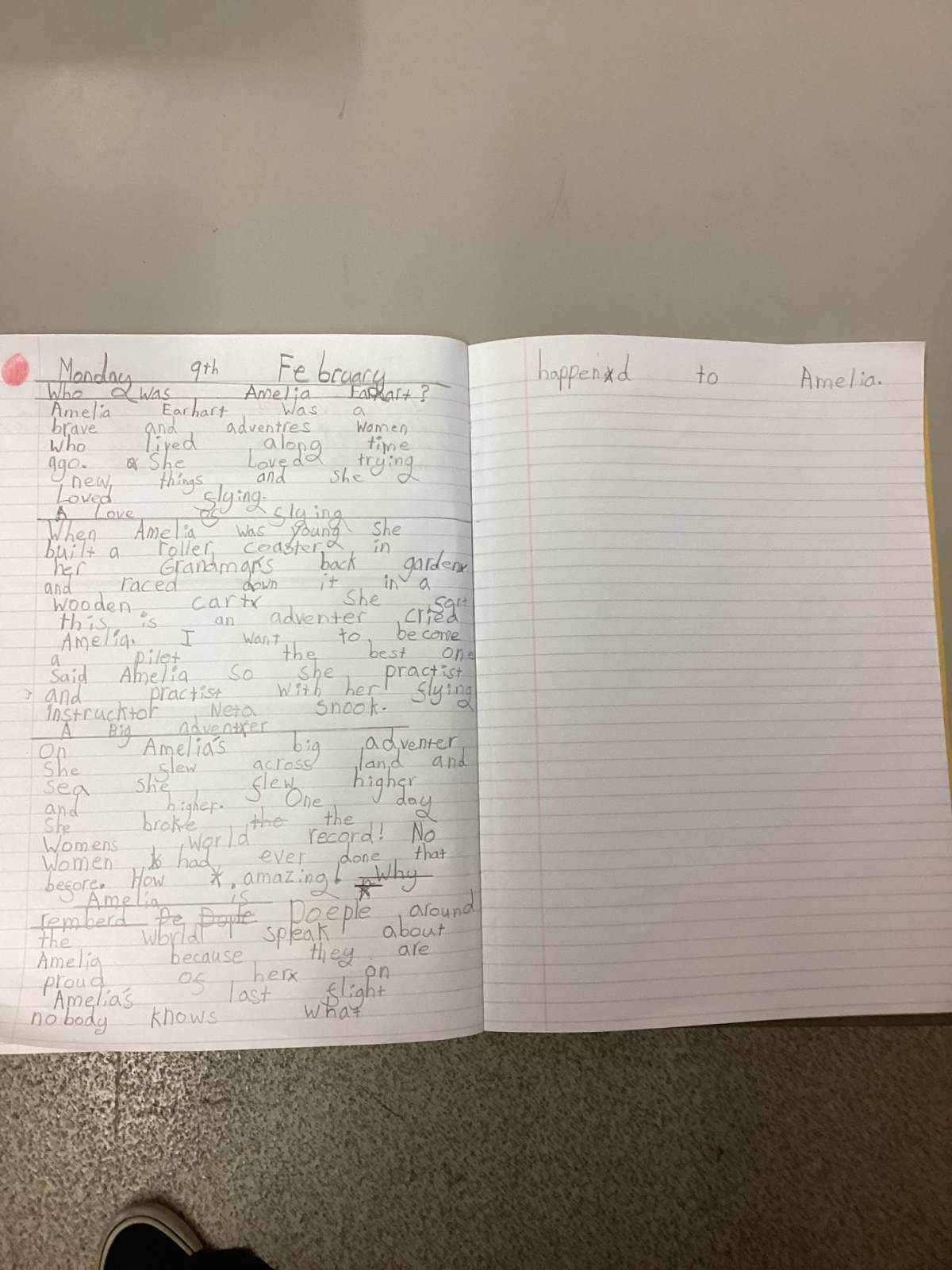
Look at the amazing work of our Year 2 children!
 |
 |
It is fun, creative yet rigorous approach to teaching writing to our pupils. It has a proven record of accelerating children’s learning.
Talk for Writing starts with enjoying and sharing stories. Throughout the school, we place a strong emphasis on children reading stories and enjoying a range of literature. Through regular reading, we want children to build up an extensive and rich vocabulary for use in their own writing and confidently develop their speaking and listening skills.
The texts we choose are selected to ensure that we have coverage across a full range of genres and themes within fiction and non-fiction. Texts fully represent the world we live in and the community we serve. We ensure there is diversity across the text range, which includes author, characters, setting and context. Where possible, we choose whole books and sometimes text extracts from high calibre authors, preferably with other texts that the children can then connect with. We also progress through a wide variety of poetry including Nursery Rhymes, shape poetry and Ballads.
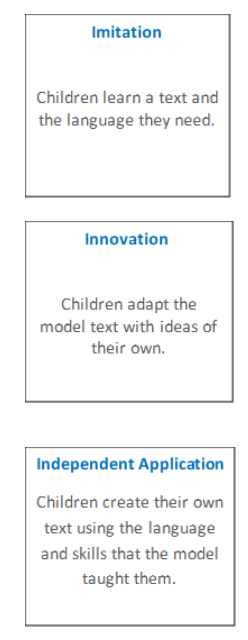
This powerful approach enables children to imitate the language they need for a particular topic orally before reading and analysing it and then writing their own version. It is built on three stages of teaching:
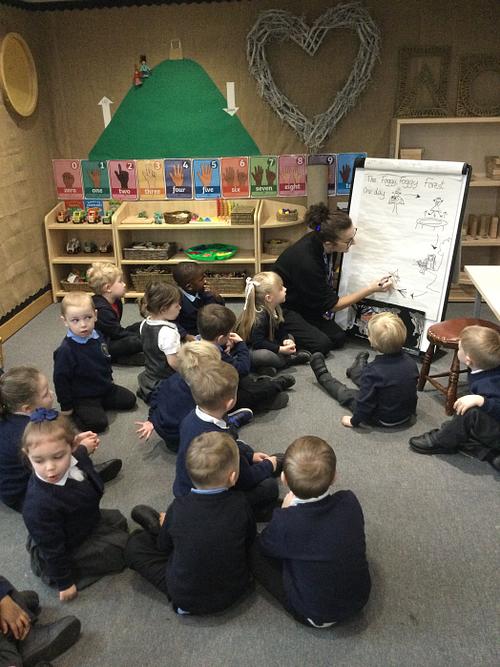
Each unit of writing starts with a 'Hook'. An activity to encourage the children to get involved with the topic of the text the children will be reading and writing about!
/i/video/T4W_Nursery_Hook.mp4
Stage One: The Imitation Stage
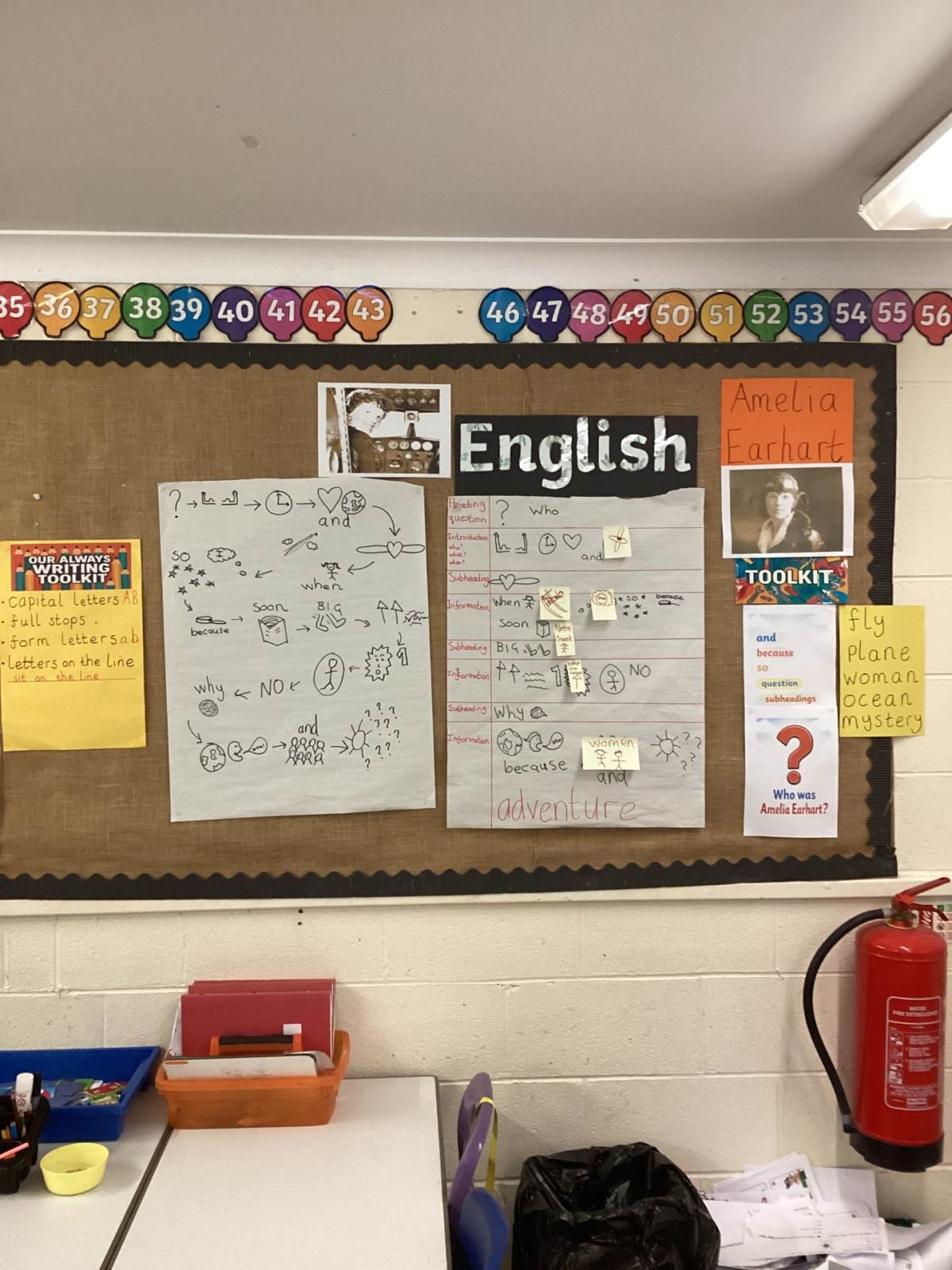
During the initial ‘imitation‘ stage of Talk for Writing (T4W), a text (fiction and non-fiction) is introduced and orally told to the children. Together they learn to tell the story off by heart. To help them remember the text a multi-sensory approach is used. They retell a text with expression and actions and use a visual story map to support their retelling. As children learn the text word for word, they build up a bank of interesting vocabulary, phrases and types of plot which they can then use in their own writing. The principle is that if a child can tell a story, they will be able to write a story.
Once the story is learnt, children are encouraged to adapt it.
 |
 |
Stage Two: The Innovation Stage
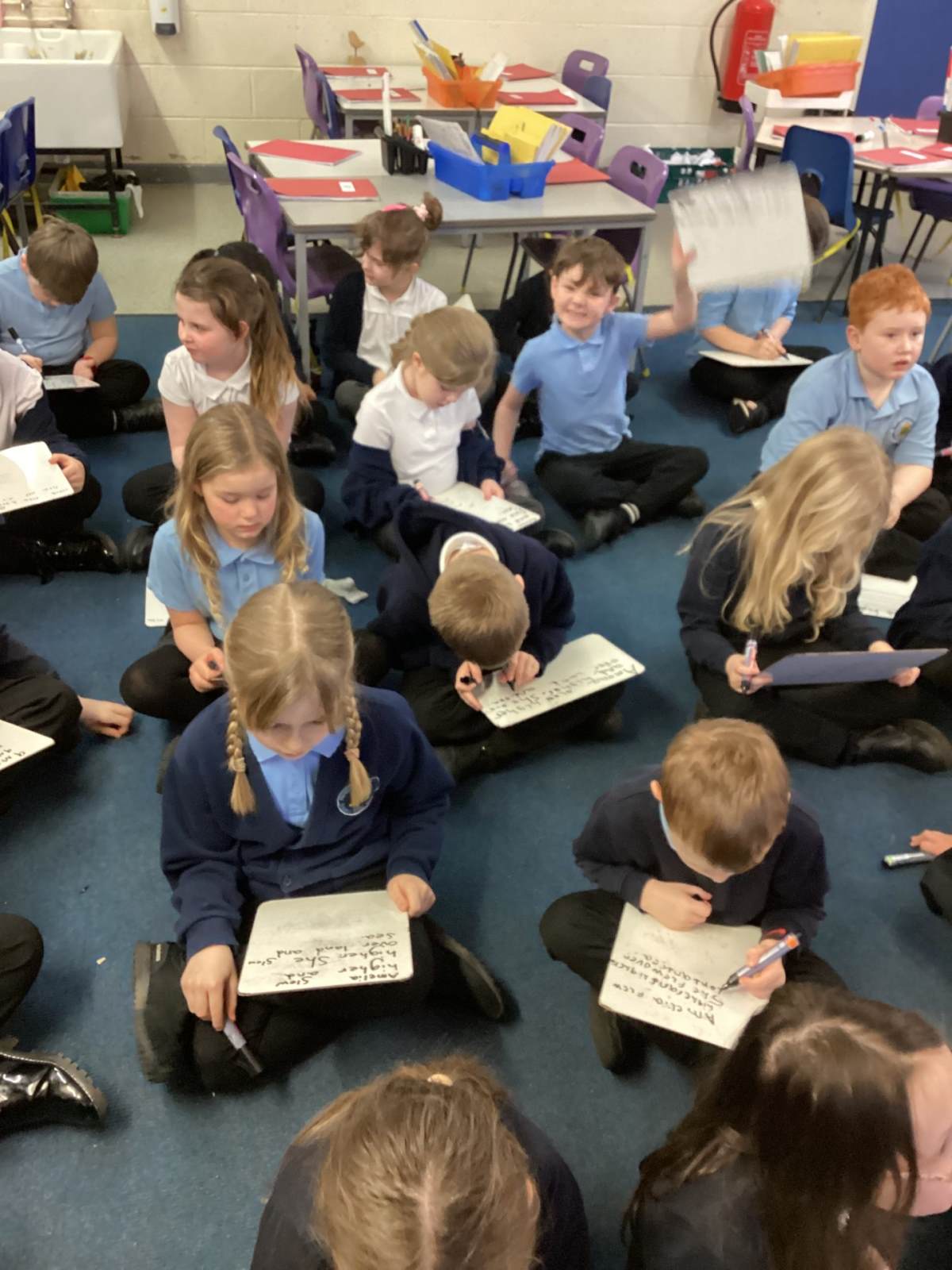
At the ‘innovation‘ stage, children make the story their own. They could start with a simple change of character or for older children it may involve telling the story from a different view point or even the next part. They will make changes to their story map and rehearse retelling their innovated story orally. They will then write out the innovated story in manageable sections and will receive feedback from the teacher. There is an opportunity to respond to this marking before they go on to write the next section. This very supportive and structured approach allows children to gain confidence and know what they need to do in order to get better.
Stage Three: The Independent Stage
The final stage is the ‘independent application‘ stage where the children use all the skills they have learnt to write an independent piece. There is the freedom to draw upon their own ideas and experiences, or they can ‘hug closely’ to the shared text should they need to.
 |
|
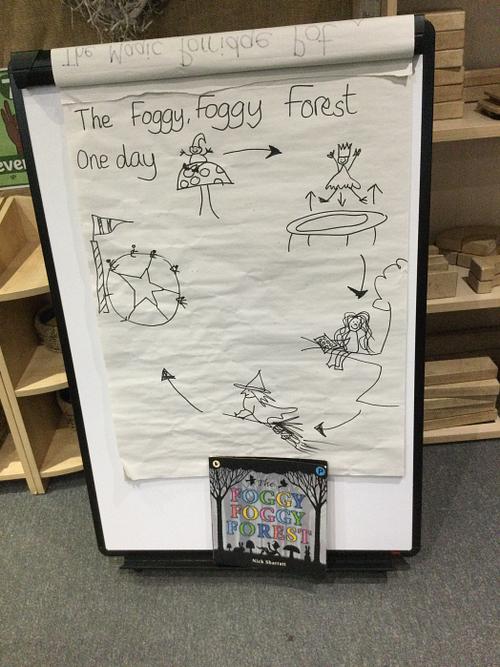 |
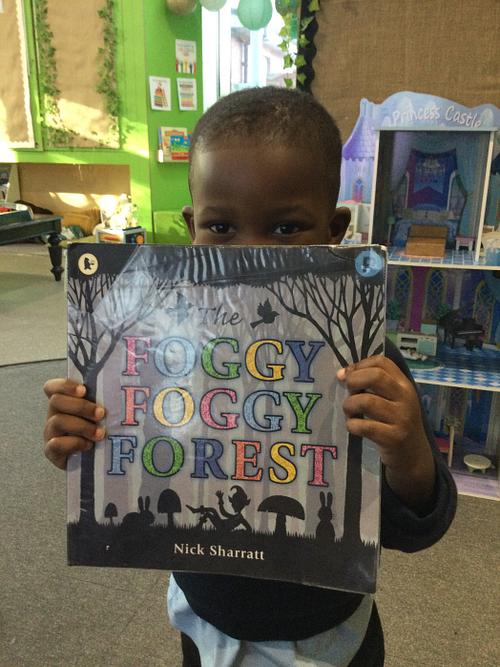
Grammar and Spelling (GPS)
Grammar and punctuation is taught in context throughout all T4W units using the T4W grammar progression document. From EYFS onwards, teachers use the correct technical vocabulary in their teaching to encourage the correct use of these terms by children. In Key Stage 2 the children develop their own “Writer’s Toolkit” in order to support themselves as independent writers.
T4W Progression and Toolkit:
/docs/English-Curriculum-Progressions-Overview-Final-2.docx
As children become competent in phonics at the end of KS1, the children begin apply their phonetic knowledge to KS2 spelling patterns, building a deeper understanding of phonics and widening their use of vocabulary. Alongside the spelling scheme of work, children are also tasks with reading, spelling and understanding ‘common exception words’. These National Curriculum selected banks of words arranged by year groups are included in spelling lessons and learnt using phonic skills. We aim for children to i read and spell these words at the end of each year and become confident in applying these words to their writing.
Spelling Shed Progression:
/docs/Spelling_Shed_Medium_Term_Plan_-_Spelling_Shed_MTP.pdf
Year Group Spellings:
/docs/Year_1_High_Frequency_Words.pdf
/docs/Year_2_high-frequency-words.pdf
/docs/Year_2_Statutory_Spelling_Words.pdf
/docs/Year_3_and_4_Statutory_Spelling_Words.pdf
/docs/Year_5_and_6_Statutory_Spelling_Words.pdf
Handwriting - A Little Wandle Approach
New to The English Curriculum in 2025, we now follow Little Wandle Handwriting. This is in conjunction with Little Wandle Phonics, working together to develop the writing skills.
We acknowledge that handwriting is also a skill and aim to ensure all children are consistently neat and legible hand writers by the end of KS1. However, this may not always be the case. We adapt our handwriting scheme to support KS2 pupils to ensure children understand the importance of presenting their work, across the curriculum, with care.
From reception to Year 3 children will have daily handwriting sessions, linking to their phonics lessons.
From year 4, children will have handwriting warm-ups incorporated into each spelling lesson, revisiting the Little Wandle Handwriting scheme.
/docs/Handwriting_R_Unit-aims-and-content_Oct-25__1_.pdf
/docs/Handwriting_R_Unit-guidance_Patterns_Oct-25.pdf
Here are Little Wandle Warm-up Activities for Handwriting. If you are encouraging your child to mark-make and write at home, these simple hand movements are a great place to start:
/docs/Handwriting_R_Hand-warm-up-routines_Oct-25.pdf
We love getting involved in independent mark making and writing!
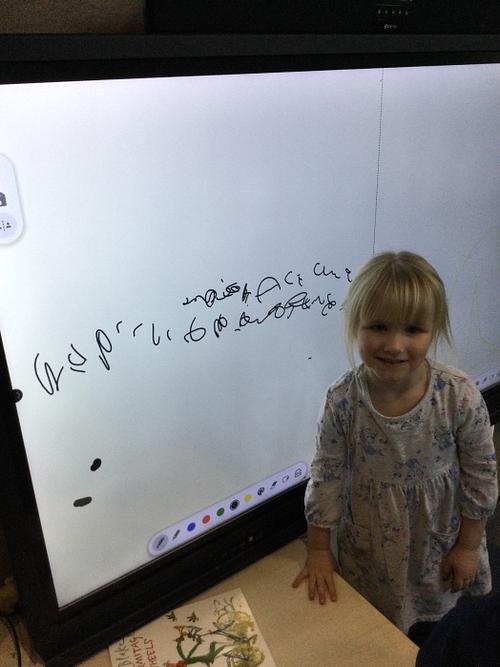 |
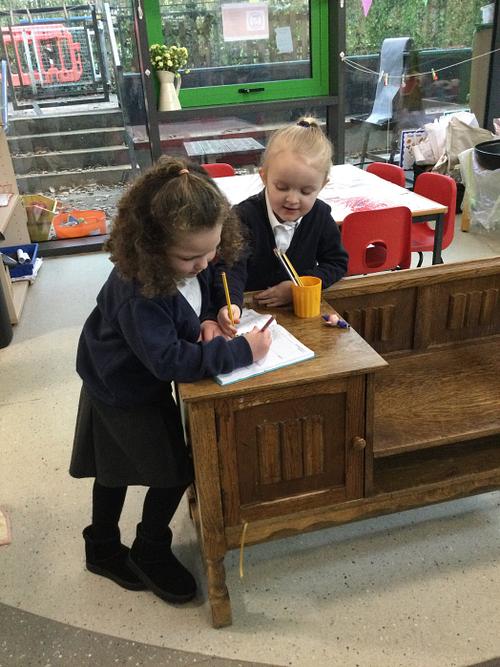 |
|
Assessment
There are National Assessments in Year 1, Year 2 and Year 6.
In Year 1 your child will sit a phonics assessment to identify which phonic patterns your child can recognise and read. The results of this test will be reported in your child's end of year report.
In Year 2 your child will have their first SATs assessment. The tests in Year 2 consist of a set of assessments conducted by your child’s class teacher along with two reading papers.
In Years 3, 4 and 5 your child will be formally assessed each term using PIRA assessments. The results won’t be nationally recorded, but they help teachers assess children’s progress and will be reported in your child’s end of year report.
At the end of Key Stage 2 in year 6, your child will sit further nationally reported SATs tests. These SATs tests are more formal and consist of timed papers in Reading, Spelling, Grammar and Punctuation and Maths. The papers (except for writing which is marked and moderated in school) are sent away for marking and the results are known before children leave primary school in July. These test results will also be reported in your child’s end of term report.
Alongside these summative termly assessments, we use on-going teacher assessment to get the most accurate picture of the child’s reading and writing level and potential.
| Events |
Coming Up.... World Book Day Thursday 6th March 2026!
DFE Programme of Study
Primary National Curriculum English.pdf